
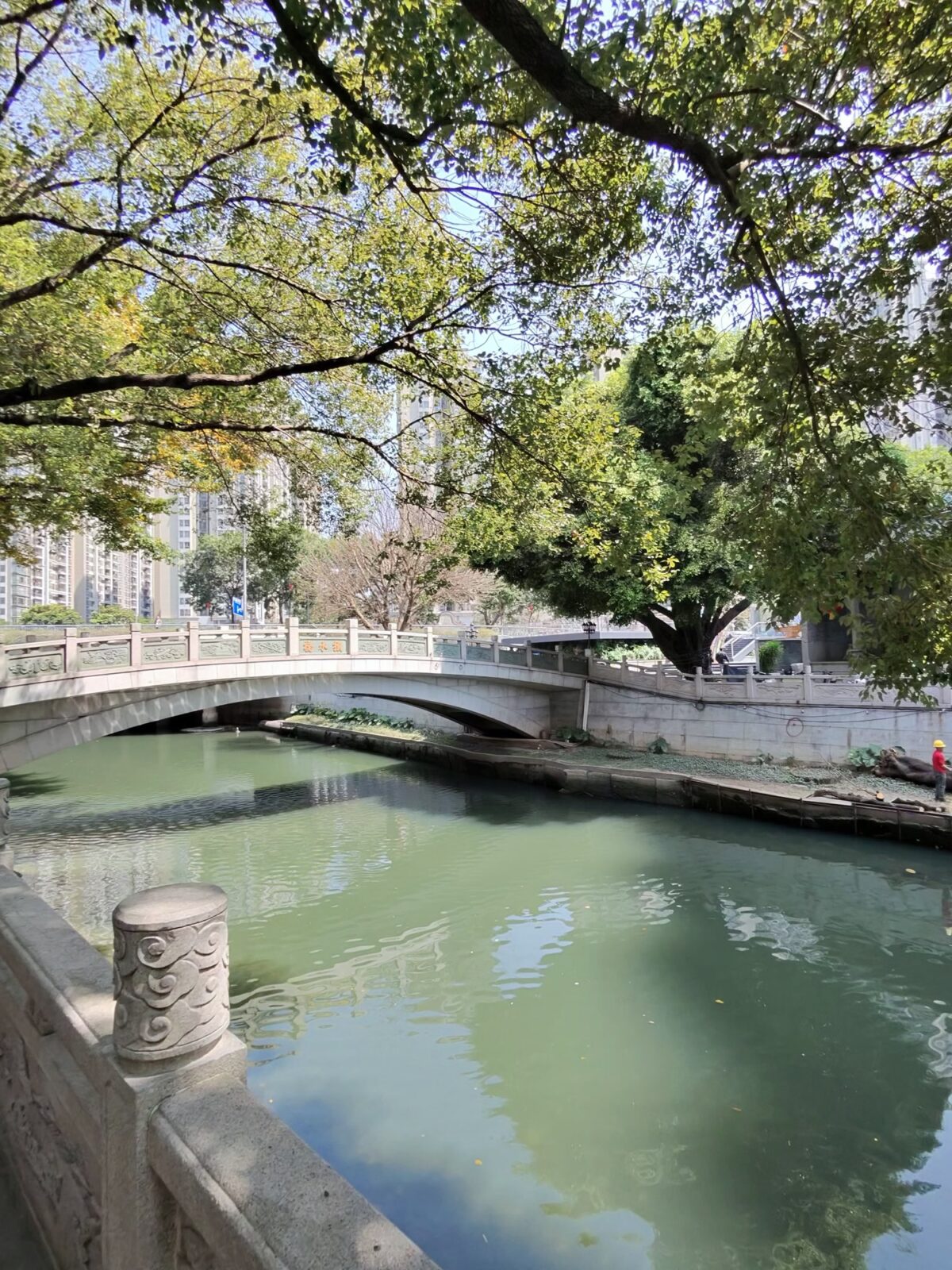
I arrived in Guangzhou on February 12, just before Valentine’s Day, reunited with my wife Emily after six weeks apart. Like most couples separated by modern life, we stitched closeness together through FaceTime and messages. I added a small ritual: daily love notes with a song attached—an attempt to keep affection concrete when presence wasn’t.
Not long after arriving, Lunar New Year took over the calendar. This year welcomed the Year of the Horse, and the city’s preparation was unmistakable. Fireworks on the first night. Dinners stacked one after another. Family time took precedence the way weather takes precedence—you don’t negotiate with it; you adjust your posture and step into it.
There was also a reminder that communities carry grief as well as joy. One aunt passed away just before the holiday, and tradition required that her wing of the family sit out the celebrations while they mourned. Even the normally playful WeChat streams quieted. From a leadership lens, it was a lesson in social intelligence: sometimes care is expressed not by doing more, but by deliberately doing less—creating room for grief without demanding it perform.
What has struck me most, however, is Guangzhou’s continued transformation—and what it suggests about systems, access, and the “friction” that determines whether people can participate fully in daily life.
Guangzhou feels cleaner and more walkable than I remember, while still holding onto open-air fresh markets alongside modern grocery stores. But the more profound shift is infrastructural: everything has electrified and digitized at scale. Scooters are electric. Bicycles are rentable by QR code for a few yuan. A significant portion of traffic is electric vehicles. And cash is nearly irrelevant. Even street merchants accept QR payments: you pick the produce, scan the code hanging under an umbrella, enter the amount, and move on.
This matters beyond convenience. In a world where many societies feel stuck—politically polarized, economically strained, psychologically exhausted—Guangzhou demonstrates what coordinated infrastructure can do: reduce friction, widen access, and make participation in the economy straightforward for a large population.
There are tradeoffs and legitimate questions (privacy, equity, resilience), but the leadership takeaway is clear: systems shape behavior. And the most powerful systems are often the quiet ones—the ones that remove daily obstacles so people can focus energy elsewhere.
This connects to another layer of my return: the search for peacefulness amid global noise. As we all watch war erupt in the Middle East and the daily din of political catastrophe remain “on tap,” I’m struck by how difficult it is to sustain wise engagement when we are continuously flooded. Guangzhou, for me, will be an oasis for a while—not an escape from caring, but a setting that makes it easier to remember what calm feels like. Leaders need that. Not as indulgence, but as maintenance. We do not lead well when we are perpetually dysregulated.
At home, Emily is working as a long-term substitute teacher at AISG, and I’ve taken on more domestic responsibilities—cooking, cleaning, hosting family meals. It has reminded me (again) that leadership is not a title; it’s a pattern of service. It also reminds me that culture is transmitted most powerfully through hospitality: shared tables, blended traditions, consistent presence.
We are in Guangzhou partly to support Emily’s mother (PahPah). One of the most meaningful developments has been language access. Using Cantonese translation tools, I’ve had the closest thing to a direct conversation with her that I’ve ever experienced—without requiring Emily to serve as interpreter. In international education we talk often about belonging, voice, and access. Sometimes those become abstract. Here they are literal: a bridge that allows relationship to occur with less mediation.
A single character captures the leadership work of this season:
陪 (péi) — to accompany.
Not to fix. To be present, consistently, without agenda.
Finally, Emily and I marked 30 years on March 8—the same date as our Chinese wedding day (March 8, 1996, over 200 guests back then). This year we chose quiet intimacy: dinner at the Conrad and a long walk home across the Canton Tower pedestrian bridge and along the waterfront.
The leadership metaphor writes itself: longevity is built less on grand moments than on aligned practices—presence, repair, accompaniment. In a noisy world, building the infrastructure of peacefulness may be one of the most strategic acts a leader can choose.
“What I’m learning in China (this week)”
Peacefulness is not apathy; it’s a condition that makes insight possible.
Systems quietly teach us what “access” really means.
陪 (péi): accompany first; fix second (if at all).