I’ve been home in the Pacific Northwest for more than a month now, long enough for the jet lag to fade, the suitcase memories to settle, and the familiar rhythms of home to start reasserting themselves. Emily just returned last week after finishing her maternity substitute assignment in Guangzhou, and while she is still working her way through the fog of time-zone adjustment, it is good—deeply good—to be a team again.
For much of this spring, we practiced a kind of long-distance partnership: me here, Emily there, both of us tending different parts of the same life. Now we are back under one roof, moving toward summer, and beginning the next transition.
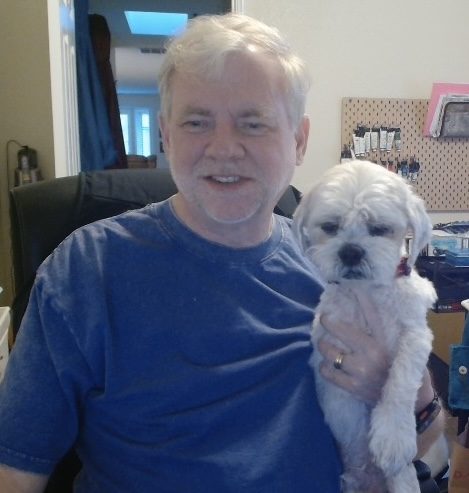
Rascal, our dog, was capably cared for by our daughter while we were away, but there is no substitute for being back in rhythm with him. He turned 14 this year, and that milestone has not come without challenges. The alone time was hard for him. The aging is visible now in ways that ask for patience and tenderness. But he is back outside more, back near us more, and lately he has returned to one of his favorite rituals: falling asleep on my chest. At 14, he has earned every bit of comfort he claims.
Meanwhile, the house on Harstine Island is coming together—though not without its own comic timing. After writing about fire-related challenges in Warsaw, I came home to my own fire-related delays here. Additional installations, permits, and inspection requirements have pushed back the final approval, and we are now hoping for final inspection next week. With any luck, we will be living in our new modular manufactured home on Harstine Island before the end of July.
It is strange and wonderful to watch a home become real in stages: delivery, placement, hookups, paperwork, waiting, more paperwork, and then—eventually—keys, furniture, routines, coffee, and the first ordinary morning.
We also managed to get the boat inflated. I am now the proud owner of an Isle Flywater hybrid, and thanks to the help of my sister and her husband, Terry, it has had its maiden voyage. Just enough paddling to whet our whistle and remind us that Pickering Passage and beyond are waiting. Summer in the Pacific Northwest has a way of making promises: water, light, mountains, cool mornings, long evenings, and the possibility that adventure does not always require going very far.
I have also reconnected with Mount Cross and returned to volunteering in that community. After Easter in Guangzhou—quiet, contemplative, and experienced mostly from afar—it has been refreshing to come back into the life of a vibrant congregation. There is something spiritually grounding about service that is local, embodied, and shared. It is one thing to miss community; it is another to step back into it and remember how much it gives.
As I think back over this first retirement season in China, I keep returning to the word that shaped much of my reflection there:
陪 (péi) — to accompany.
In Guangzhou, it meant accompanying Emily, PahPah, family, a changing city, and a quieter version of myself. Back here in Washington, it means something slightly different but equally important: accompanying Rascal in his old age, accompanying Emily as we settle back into partnership, accompanying a house as it becomes a home, accompanying a church community as it continues its faithful work, and accompanying this new rhythm of moving between China and the Pacific Northwest.
The world remains noisy. The headlines remain heavy. The work of care, justice, peace, and community remains unfinished. But perhaps that is why these quieter practices matter so much. We do not withdraw from the world by tending home, family, faith, and place. We strengthen ourselves for the world by doing so.
This summer will be full of transition: settling, inspecting, moving, paddling, volunteering, and learning how this new chapter wants to unfold. It is good to be home. It will be good to return to China when the time comes.
For now, I am here—accompanying what is next.